


































Q&A
Background
At the end of August 2026, Select Sport was contacted by NGO, Danish Consumer Council TÆNK regarding PFAS testing of sports tape. The product tested was Profcare K (Style: 720003, Lot No. 20250401).
The testing method applied was Analysis of an Alkaline Extract Using Liquid Chromatography and Tandem Mass Spectrometry in accordance with the standard DIN EN 17681-1:2025: Textiles and Textile Products - Per- and Polyfluoroalkyl Substances (PFAS).
The analysis identified elevated levels of PFOA-related substances and fluorinated compounds. The substances detected were 8:2 FTOH and C9-C14 PFCA. The measured concentrations exceed the limits established under the POP Regulation (EU) 2019/1021, Article 3(1), Annex I, as well as REACH Regulation Annex XVII, Entry 68.
These substances were present in the material due to a water-repellent treatment intended to improve tape performance in wet and high-perspiration environments. Only the outer surface of the material received this treatment.
We sincerely regret this situation and would like to emphasize that our products are routinely tested and managed in accordance with REACH and SVHC requirements, covering more than 250 substances listed by the European Chemicals Agency (ECHA) as Substances of Very High Concern (SVHC). However, these compliance programs do not specifically include TF or TOF screening methods associated with PFAS requirements under the POP Regulation.
Product Status
The product has subsequently been redesigned and is now fully compliant.
Select Sport changed the textile composition during the transition from 2025 to 2026. The current version of the product is manufactured without PFAS and complies with the requirements of REACH, SVHC and the POP Regulation, including:
Regulation (EU) 2021/1297, Regulation (EU) 2025/718, Regulation (EU) 2020/784, Regulation (EU) 2023/1608
Select Sport has already destroyed previously held inventory of the former product version. However, as residual stock may still remain in the market, we are conducting a recall of all Profcare K products manufactured prior to 2026.
The recall applies to:
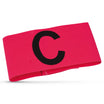
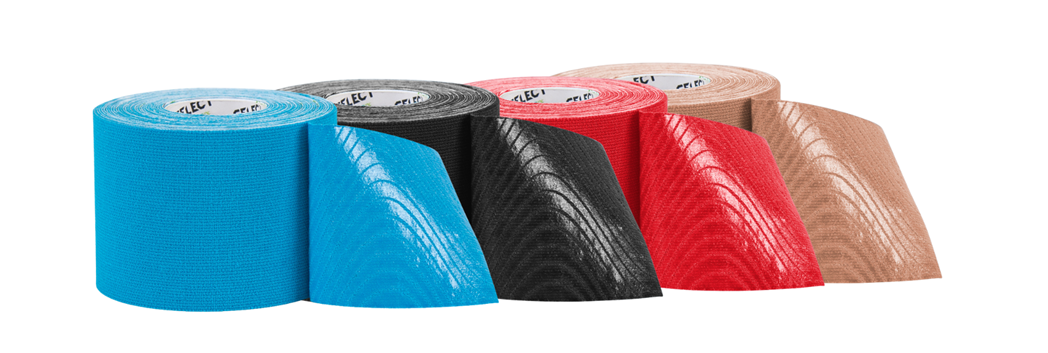
Profcare K – Blue, Beige, Red and Black (5 cm × 5 m).
Products can be identified by the Lot No. displayed in a white box beneath the barcode on the packaging. Two symbols appear next to the code: LOT and an hourglass symbol. The first four digits indicate the production year. Any product manufactured before 2026 should be returned or disposed of.
How to handle the situation:
Consumers
Please return the tape to the retailer from whom it was purchased.
Retailers
Please contact your local Select Sport representative. They will register the affected lot numbers and provide guidance regarding return, disposal and reimbursement procedures.
Disposal
Consumers who simply wish to dispose of the product should follow the guidance issued by the Danish Environmental Protection Agency. Sports tape is generally classified as residual waste due to its composition of synthetic materials and adhesives. The Agency further recommends that end-of-life consumer products containing PFAS should be kept out of recycling streams and disposed of as residual waste.
Further information: https://mst.dk/borger/sundhed-og-kemi/pfas-i-forbrugerprodukter
Contact Information
For any additional questions, please contact:
retur@select.dk
Analytical Findings
The following substances were identified in the tested product:
C9-C14 PFCA (PFOA-related substances):
- 60,000 μg/kg
- Equivalent to 60 mg/kg
- Equivalent to 60 ppm
- Equivalent to 0.006%
8:2 FTOH:
- 50,000 μg/kg
- Equivalent to >50 mg/kg
- Equivalent to >50 ppm
- Equivalent to >0.005%
Risk Assessment
PFAS-Related Concern Present
For consumers using Profcare K sports tape, exposure generally occurs over a limited number of hours. This significantly reduces overall risk, as PFCA substances are known to exhibit limited absorption through intact skin. Neither PFCA compounds nor 8:2 FTOH are generally recognized as strong skin irritants or sensitizers. Nevertheless, the presence of non-compliant PFAS substances must be taken seriously.
|
The Danish, NGO, Consumer Council THINK has stated: "Products such as sports tape represent only a small portion of our overall PFAS exposure, but they are nevertheless another source of these substances in everyday life. The primary concern regarding PFAS in consumer products relates to their production. During manufacturing, PFAS may enter the environment, where they can spread and ultimately affect both people and nature. If you already own one of the tapes in which PFAS has been identified, there is no reason for alarm. Exposure from the tape itself is not considered dangerous. However, because the product contains an unlawful level of PFAS, we encourage consumers to contact the company and request a replacement." |
Detailed Risk Analysis
|
Risk Area |
Risk Level |
Time Horizon |
Assessment |
|
Skin irritation |
Low |
Hours to days |
PFCA and FTOH substances are generally not considered primary skin irritants at the detected concentrations. No skin irritation is expected during normal use. |
|
Allergy / sensitization |
Low |
Weeks to months |
PFAS substances are not typically recognized as common contact allergens in adhesive tape products. |
|
Acute systemic toxicity |
Low |
Hours to days |
Available data suggest limited dermal absorption of PFCA compounds. Exposure from normal use is therefore expected to be low and acute systemic toxicity is not anticipated. |
|
Systemic uptake |
Low |
Months to years, with repeated exposure |
PFCA-related substances and 8:2 FTOH may be absorbed through the skin to a limited extent. Based on the measured concentrations and expected use patterns, overall systemic exposure is considered low. |
|
Bioaccumulation |
Low to Moderate |
Years, with repeated exposure |
PFCA compounds are persistent substances that may accumulate in the body over time when exposure is continuous. |
|
Immunological effects |
Low |
Many years, with repeated exposure |
PFAS exposure has been associated with immune-related effects under long-term exposure scenarios. Sports tape alone is unlikely to be a significant contributor at the detected levels. |
|
Endocrine / reproductive effects |
Low |
Many years, with repeated exposure |
Certain PFAS substances have been associated with hormonal, reproductive and developmental effects following long-term exposure. Considering the detected concentrations and expected skin absorption, risk from normal use is considered low. |
|
Cancer risk |
Very Low |
Decades, following long-term systemic exposure |
Certain PFAS substances have been associated in scientific literature with cancer-related effects following prolonged systemic exposure. Based on the measured concentrations and expected limited skin absorption, the risk from normal use is considered very low. |
|
Environmental risk |
Moderate to High |
Years to decades |
PFCA-related compounds are highly persistent in the environment. Fluorotelomer alcohols (FTOHs) may degrade into persistent PFAS substances. Over time, releases may contribute to the overall environmental PFAS burden. |
